
Engineering firm project admin delegation usually breaks down for one reason: the owner waits until everything is urgent. By then, every task feels too sensitive, too messy, or too hard to explain to someone new.
The fix is not to delegate everything at once. The fix is to document one repeatable workflow and hand it off cleanly. Start with the structure in How to Document Your Processes So Your EA Can Run Them Independently, then apply it to the project admin that keeps pulling principals and project managers away from higher-value work.
Why Engineering Project Admin Gets Stuck With Owners
In many engineering firms, project admin stays with the owner or project manager long after it should have moved. Part of that is habit. The owner has always sent the meeting invites and updated the tracker, so it keeps happening that way.
Unclear ownership is the second reason. When nobody is formally responsible for a task, it drifts back to whoever cares most about the outcome, which is usually the person with the least time.
The third reason is fear of errors. Engineering firms run on accuracy, and owners worry that a missed deadline or misfiled document could create a client problem. That concern is reasonable.
But the real risk is not delegation itself. It is unclear delegation, where tasks are handed off without steps, boundaries, or review. Standing still has a cost too. Research from the Project Management Institute on the high cost of low performance shows how much project value is lost when execution and communication break down.
Step 1: Identify Admin Work That Repeats Every Week
Start by listing the admin work that shows up every week. Look back at your calendar, inbox, and task list from the past two weeks, and note anything that followed the same pattern.
For most firms, that list includes scheduling project meetings, sending reminders, formatting meeting notes, updating trackers, checking for missing documents, preparing agendas, organizing project folders, tracking proposal dates, and logging follow-up items.
This is the core of engineering project admin support, and it’s where an offshore EA delivers value fastest. Pick three to five of these tasks to start, choosing the ones that eat the most time and carry the least technical risk.
Step 2: Document the Trigger, Steps, Output, and Review Rule
When you delegate project admin to an EA, every task needs four things written down: what starts it, what steps to follow, what the finished output looks like, and who reviews it before it moves forward. This gives the EA a clear definition of done and gives you a clear checkpoint.
Here’s an example for updating a proposal tracker:
| Field | Example: Updating the Proposal Tracker |
| Trigger | A new RFP arrives, or a proposal deadline is within 14 days |
| Steps | Log the opportunity, record the due date and required inputs, assign an owner to each input, and send reminders 7 days and 3 days before the deadline |
| Output | An updated tracker showing every open proposal, its deadline, and which inputs are still missing |
| Review Rule | The principal reviews the tracker every Monday and makes all pursuit and pricing decisions |
Once one task is documented this way, the rest get easier. The same four fields become a template your team can reuse for meeting scheduling, file organization, or client follow-up.
Step 3: Keep Technical Decisions With Licensed Staff
This step sets the boundary that makes delegation safe. The EA can route a question, not answer the engineering question. The EA can track a deliverable, not approve its content. The EA can prepare the packet, not seal it or submit it without review.
Put that boundary in writing so everyone on the team understands it. It protects the firm, and it protects the EA from being pulled into decisions they shouldn’t make.
The same principle applies to scope and contract questions. AIA Contract Documents recommends establishing clear firm policies for change management, and those policies should name who approves changes. In a well-run model, the EA logs and routes change requests, while the project manager or principal decides.
Access limits reinforce the boundary. Give the EA edit rights only where each task requires them, and keep approval rights with licensed staff.
Step 4: Use a Weekly Check-In to Expand Scope
A weekly check-in keeps delegation visible. In a short meeting, the owner or project manager reviews what went well, what got stuck, what can be expanded, and what should remain supervised.
Use the check-in to improve the documentation, too. If the EA had to ask the same question twice, the process notes need an update. The Weekly EA Check-In Template for Busy Founders gives you a ready structure for this conversation.
Over time, the check-in becomes the engine for growth. Tasks that run cleanly for several weeks can move to lighter review, and new tasks can be added. For a newly hired EA, The 30-60-90 Day Plan for Your New Executive Assistant is a useful way to pace that expansion.
Step 5: Build a Project Admin Dashboard
A simple dashboard gives owners and project managers one place to see what’s moving and what’s stuck. It doesn’t need special software. A shared spreadsheet or project board works fine.
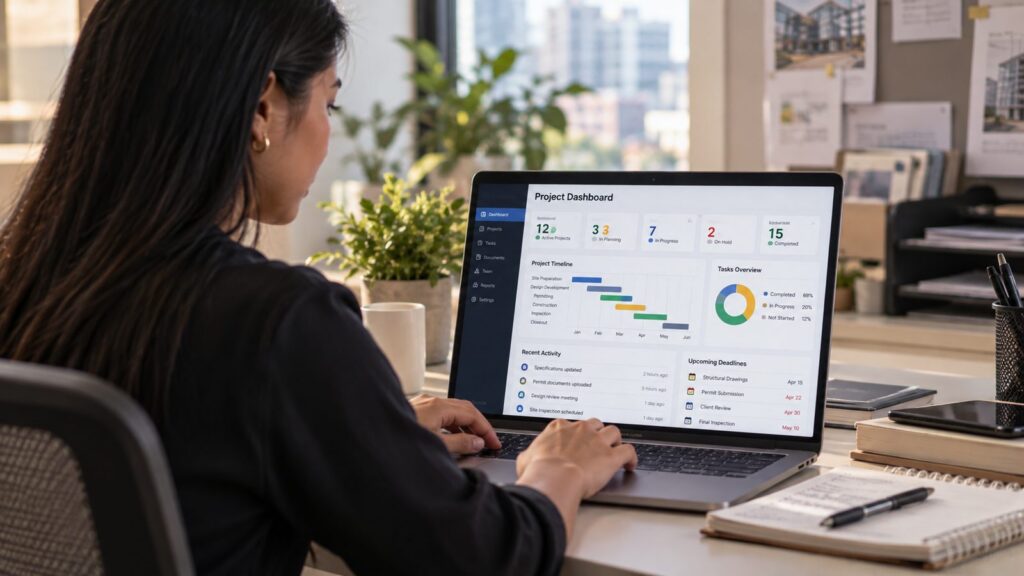
Include open items, pending client responses, proposal deadlines, internal blockers, documents awaiting review, and owner decisions needed. The EA keeps the dashboard current, and the owner uses it to spot problems before they turn urgent.
The dashboard also changes the conversation. Instead of asking for status updates, the owner can see status at a glance and spend the weekly check-in on decisions.
Quick Checklist Before You Delegate Project Admin
- The task repeats at least weekly and follows a predictable pattern.
- The trigger, steps, output, and review rule are written down.
- No technical judgment, sealed work, or contract decision is involved.
- The EA has access only to the tools and folders the task requires.
- A weekly check-in is on the calendar to review results.
FAQs About Engineering Project Admin Delegation
How can engineering firms delegate project admin safely?
Engineering firms can delegate project admin safely by separating coordination from technical judgment. The EA can manage schedules, trackers, files, reminders, and follow-ups. Licensed staff should keep ownership of technical decisions, client recommendations, sealed documents, scope approvals, and contract interpretations.
What project admin tasks can an offshore EA handle?
An offshore EA can handle meeting scheduling, agenda prep, note formatting, deadline reminders, proposal trackers, CRM updates, file organization, and follow-up logs. They can also help project managers keep stakeholders moving by reminding people about missing inputs, upcoming deadlines, and decisions that need review.
How do engineering owners delegate without losing control?
Owners keep control by documenting the process, defining review points, limiting tool access, and holding a weekly check-in. Delegation should create visibility, not blind handoff. The EA should own the admin steps while the owner or project manager remains responsible for decisions and approvals.
Can an EA help project managers stay organized?
Yes. An EA can help project managers by maintaining trackers, preparing meeting materials, documenting action items, and following up on open tasks. This support reduces administrative drag and gives project managers more time for technical coordination, client communication, and team leadership.
What should a firm review before assigning project admin to an EA?
Review the task frequency, risk level, tool access needed, approval point, and definition of complete. If the task repeats often, has clear steps, and can be reviewed before client delivery, it’s usually a good candidate for early delegation.

Delegation Works When the Boundaries Are Clear
Engineering firm owners don’t have to choose between doing everything themselves and handing sensitive work to the wrong person. The middle ground is structured project admin delegation: clear tasks, clear review points, limited access, and a weekly rhythm that keeps work visible.
To make the handoff practical, pair Weekly EA Check-In Template for Busy Founders with Building Trust with a Remote Executive Assistant. Together, they give your team the communication structure and visibility needed to expand delegation without losing control.
Ready to hand off project admin without handing off accountability? Talk with Outsourced Scale about a trained offshore EA who can keep your trackers, meetings, and follow-ups moving while your engineers stay focused on the work only they can do.