
Outsourced Scale

Marketing Virtual Assistant

What a Marketing Virtual Assistant Actually Does (and Why You Probably Need One)

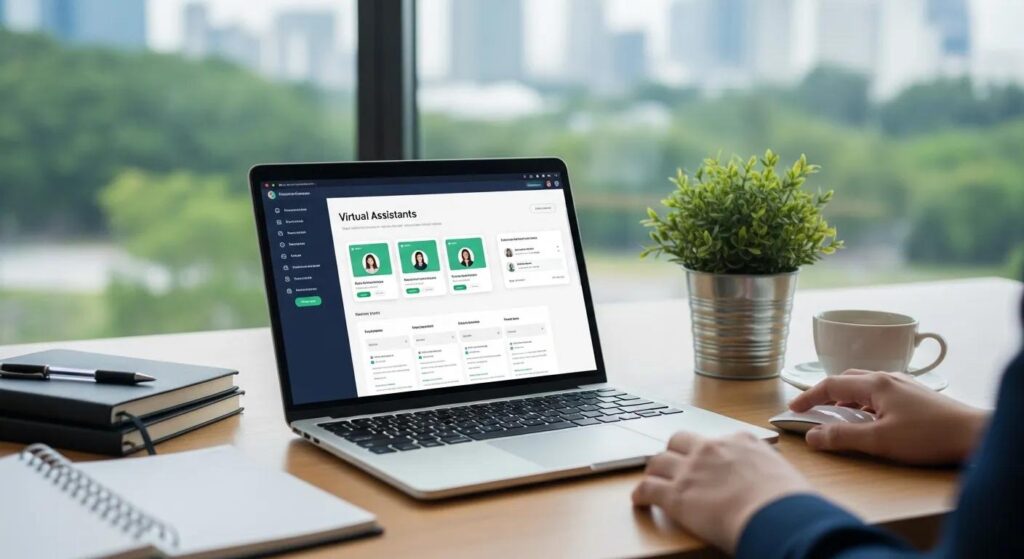
The fundamentals of marketing have not changed, but the execution workload has tripled. What used to mean running ads and updating a website now includes managing social platforms, building email sequences, publishing SEO content, monitoring local profiles, and coordinating campaigns across tools that do not talk to each other. The strategic part stayed manageable. The doing part became a full-time job, and for most founders, that job still falls on them. You know what needs to happen. The plan exists. The channels are chosen. What is missing is the person who can step in, execute the work, and keep it all running without needing constant direction. That is where a Marketing Virtual Assistant comes in, not as someone who replaces your vision, but as the execution layer that turns marketing plans into consistent output. Key Takeaways What a Marketing Virtual Assistant Is (and Is Not) A Clear Definition of a Marketing Virtual Assistant A Marketing Virtual Assistant handles the execution side of marketing. They take defined tasks, workflows, and campaigns and move them from plan to publish. This includes scheduling social posts, building email campaigns, updating content, managing tools, and coordinating follow-through across multiple channels. The work is structured, repeatable, and focused on keeping marketing operations running without constant oversight. The role is built around ownership. Once a task or workflow is handed off, the assistant owns the follow-through. That means deadlines are met, platforms stay updated, and campaigns go live as planned. The value is not in creativity or big ideas. It is in reliability and throughput. How This Role Differs From a Strategist or Agency A Marketing Virtual Assistant does not decide what to publish or which channels to prioritize. They do not build your messaging, audit your brand, or recommend a new positioning strategy. That work belongs to strategists, consultants, or internal leadership. The assistant runs the plan that already exists. Agencies often combine strategy and execution, but they work in cycles, deliver in batches, and charge for planning time whether you need it or not. A Marketing Virtual Assistant fills the gap between those cycles. They handle the ongoing, repetitive work that keeps marketing moving between big projects or strategic reviews. Common Misunderstandings About the Role One frequent assumption is that a Marketing Virtual Assistant can do everything. The reality is that the role works best when focused on execution across a few defined channels or workflows. Asking one person to manage paid ads, build a content strategy, design graphics, write copy, and handle customer service will result in surface-level work across all of it. Another misunderstanding is that the assistant decides what gets done. The role requires clear direction at the start. Once workflows are established and expectations are set, the assistant runs them independently. But the initial setup, priorities, and approval processes need to come from leadership. Core Responsibilities of a Digital Marketing Virtual Assistant Campaign Setup and Maintenance Campaign execution includes the technical work that happens after strategy is decided. This means building landing pages in your website platform, setting up tracking parameters, uploading creative assets, scheduling email sends, and making sure everything is connected properly before launch. It also includes the maintenance work that happens after launch, such as updating copy, swapping images, adjusting targeting settings, or fixing broken links. These tasks are not glamorous, but they determine whether campaigns actually go live on time. When someone else owns this layer, campaigns stop sitting in draft mode waiting for the founder to find two hours to finish the setup. Cross-Channel Coordination Marketing does not happen in one tool. A product launch might include email announcements, social posts, blog content, and website updates. A Digital Marketing Virtual Assistant coordinates the execution across those channels so everything publishes at the right time and reflects the same messaging. This is not about managing strategy. It is about making sure the plan you built actually happens. That includes tracking what needs to go live when, confirming assets are ready, and flagging anything that might cause delays. The result is campaigns that feel cohesive instead of disjointed or late. What an SEO Virtual Assistant Handles Day to Day On-Page SEO Support On-page SEO execution includes updating title tags and meta descriptions, implementing internal links between related content, formatting blog posts for readability, adding alt text to images, and making sure headings follow a logical structure. These are the tasks that make content easier for search engines to index and rank. The work is detail-heavy and time-consuming, but it does not require advanced technical knowledge. It requires consistency and follow-through. When these tasks are handled as part of a regular workflow, SEO improvements compound over time instead of happening in sporadic bursts. Local SEO and Visibility Tasks Local SEO execution focuses on keeping business profiles accurate and active. This includes updating Google Business Profile information, monitoring and responding to reviews, checking citation accuracy across directories, and uploading photos or posts to keep profiles fresh. The SEO Virtual Assistant does not audit your local strategy, but they make sure the tactics you have chosen are implemented and maintained. For service businesses, local visibility depends on operational consistency more than one-time optimization. An assistant keeps profiles updated, flags review issues, and ensures information stays consistent across platforms. That steady maintenance prevents visibility drops caused by outdated listings or neglected profiles. SEO Workflows Versus SEO Strategy An SEO Virtual Assistant executes the checklist. They do not decide which keywords to target, build the content calendar, or determine site architecture. That requires an SEO specialist or strategist who understands search intent, competitive gaps, and technical infrastructure. The assistant handles what happens after those decisions are made. They implement the internal links, update the metadata, format the content, and track which tasks are complete. This separation keeps execution moving without waiting for strategic reviews every time a page needs updating. How a Social Media Virtual Assistant Supports Consistency Content Scheduling and Publishing Social media execution includes uploading posts to scheduling tools, formatting
Marketing Virtual Assistant

The Best Places to Hire an Affordable Marketing Assistant

Finding affordable marketing help shouldn’t require choosing between quality and cost. The challenge isn’t a lack of options, it’s knowing which hiring channel matches your budget, timeline, and support needs without creating new problems through unreliable execution or hidden management costs. Key Takeaways Understanding Your Marketing Assistant Options Why the hiring channel matters as much as the person The platform or service you hire through determines vetting standards, backup coverage, training quality, and how much daily oversight you provide. A skilled marketing assistant hired through a channel with no screening process still requires you to verify credentials, set up tools, document workflows, and handle performance issues without support. The same assistant hired through a managed service comes with established quality control, documented processes, and account management that handles gaps when they take time off or leave. Hiring channels shape reliability because they determine who handles recruiting, training, tool integration, and performance monitoring. Freelance platforms connect you directly with individuals but leave screening and management entirely to you. Agencies and offshore providers take on vetting, training, and oversight, which reduces your time spent managing but increases per-hour costs compared to direct freelance hiring. What “affordable” actually means in 2026 Affordable marketing support in 2026 ranges from $8/hour for offshore full-time assistants to $65/hour for experienced local hires, with freelance platforms and VA agencies falling between $15-50/hour depending on skill level and management structure. According to the Bureau of Labor Statistics, U.S.-based marketing assistants average $48,000 annually ($23/hour), making offshore and agency options 40-75% less expensive for comparable task execution. Affordability shifts based on whether you pay for execution only or execution plus vetting, training, and backup coverage. A $12/hour offshore assistant with no management support becomes expensive when you spend 10 hours weekly fixing errors, retraining on tools, and covering their time off. A $28/hour managed VA who delivers consistent quality with documented workflows and backup support often costs less per delivered task than the lower hourly rate without structure. Freelance Platforms (Upwork, Fiverr, Freelancer) How freelance platforms work Freelance platforms connect you directly with independent contractors who bid on posted projects or accept invitations based on their profiles. You post a job description, review proposals, interview candidates, and hire individuals for hourly or project-based work. According to Upwork, over 5 million businesses use freelance platforms annually, with marketing roles among the top-hired categories for small business support needs. You handle all aspects of the working relationship: verifying skills, negotiating rates, providing tool access, setting expectations, monitoring performance, and replacing contractors who don’t work out. Platforms provide payment processing, time tracking, and dispute resolution, but they don’t screen candidates for quality, train them on your tools, or provide backup when contractors are unavailable. Typical costs and payment structures Marketing assistants on freelance platforms charge $25-50/hour for experienced U.S.-based contractors, $15-30/hour for international contractors with strong portfolios, and $8-15/hour for newer contractors building their client base. Most platforms add 10-20% service fees on top of contractor rates, and payment terms typically require weekly or milestone-based deposits held in escrow until work is approved. Hourly arrangements let you pay only for active work time but require tracking, approval, and billing reconciliation each week. Project-based contracts set fixed prices for defined deliverables, which removes hourly monitoring but shifts scope management and quality control entirely to you without built-in accountability structures. What freelance platforms do well Key advantages of freelance platforms: Common challenges and limitations Primary limitations when hiring through freelance platforms: Best for: Short-term projects and specialized skills Freelance platforms work when you need specific deliverables completed within 2-8 weeks, have clear project briefs written, and can dedicate time to contractor oversight without expecting the relationship to extend beyond the current project scope. They fit businesses that already have marketing processes documented and need execution support rather than strategic direction or long-term capacity building. Virtual Assistant Agencies (Managed VA Services) How VA agencies operate VA agencies recruit, screen, train, and place assistants into client businesses while maintaining ongoing performance management and quality control. You describe your needs, the agency matches you with a vetted assistant, and an account manager monitors delivery quality, handles issues, and provides replacement coverage when your assigned assistant is unavailable. According to Outsource Accelerator, managed VA services have grown 23% annually as businesses shift from direct hiring to provider-managed support. Agencies train assistants on common tools, establish communication protocols, and document standard workflows before placement, which reduces onboarding time compared to training a freelancer from scratch. Account managers serve as escalation points when performance issues arise, removing the awkward dynamic of founder-to-assistant confrontations about quality or missed deadlines. Cost range and what you’re paying for Managed VA services charge $18-35/hour depending on assistant skill level, service category complexity, and whether you need full-time or part-time coverage. Monthly retainers typically range from $1,200 for 40 hours/month of basic admin support to $3,500 for 160 hours/month of specialized marketing execution including content creation, campaign management, and analytics reporting. The cost premium over direct freelance hiring pays for recruiting, skills verification, tool training, documented processes, account management, and backup coverage that eliminates gaps when your primary assistant is sick, on vacation, or leaves the company. You’re buying consistent execution with reduced oversight rather than just hourly task completion. The vetting and training advantage How managed VA agencies ensure quality before placement: Backup support and account management When your assigned assistant is unavailable, agencies provide trained backup coverage that accesses your documented workflows and maintains task continuity rather than letting work stop entirely. Account managers conduct regular check-ins to verify satisfaction, address emerging issues before they become performance problems, and adjust service levels as your needs change without requiring you to manage those conversations directly with your assistant. Documented processes created during onboarding transfer to backup assistants and replacements, preventing knowledge loss when personnel changes occur. This structure works for businesses that need reliable, ongoing support but lack internal HR capacity to manage remote employees or handle the interpersonal complexity of firing underperforming

Offshore Support, Payroll Operations, Risk and Compliance

W-2 + 941 Ops Map: What Payroll Providers Can Offshore vs Must Keep In-House (2026)

Tax season doesn’t fail because payroll teams “don’t work hard.” It fails because the payroll operations workflow gets messy—handoffs, approvals, and last-minute client data. This ops map separates what can be offshore-supported from what must remain in-house, with a clean QA and approval chain. In 2026, payroll operations succeed or break based on clarity of ownership, access control, and review—not effort alone. Payroll Operations Workflow: Why Offshore Support Needs Boundaries Modern payroll firms are under pressure to move faster without increasing risk. That’s why many are exploring offshore support as part of their payroll operations workflow. The mistake isn’t outsourcing itself—it’s outsourcing without a defined operational map. W-2 preparation and 941 payroll tax filing touch compliance, deadlines, and sensitive data, which means the payroll operations workflow must clearly distinguish execution support from final authority. Offshore teams can assist with preparation, validation, and documentation, but accountability must stay with the payroll firm. In many firms, this boundary-setting becomes easier when payroll operations are aligned with HR outsourcing—especially for employer-facing processes like onboarding documentation, policy acknowledgments, and routine HR admin that often spill into payroll requests. With the right division of labor, HR teams (or an HR outsourcing partner) can own HR admin workflows while payroll keeps control of tax and filing authority—reducing last-minute exceptions, improving documentation quality, and making the overall workflow more audit-ready. What Parts of Payroll Processing Can Be Outsourced? Payroll processing includes far more than pressing “submit.” Within a well-designed payroll operations workflow, data cleanup, report preparation, reconciliation support, and document organization are execution-heavy tasks that can be safely offshore-supported when guardrails are in place. What cannot be outsourced are judgment calls, final filings, exception approvals, and client-facing compliance decisions. A payroll compliance checklist in 2026 isn’t just about tasks—it’s about defining which steps require licensed oversight and which steps are operational in nature. Can Offshore Teams Handle W-2 Prep Support? Yes, offshore teams can support the W-2 process checklist by preparing draft forms, reconciling totals against payroll registers, flagging discrepancies, and organizing employee records ahead of filing deadlines. What they should not do is finalize forms, submit filings, or make classification determinations. The value comes from reducing internal workload before the final review stage, not replacing accountability. 941 Payroll Tax Filing: Where Firms Must Retain Control Quarterly 941 payroll tax filing is one of the clearest examples of why an ops map matters. Offshore teams can assist with data compilation, variance checks, and documentation assembly, but filing authority, approvals, and IRS communication must remain in-house. In 2026, audit exposure often stems from unclear handoffs rather than incorrect math. Keeping filing authority centralized while offloading prep work is how firms scale safely. How Payroll Firms Prevent Errors When Outsourcing Tasks Error prevention isn’t about limiting access, it’s about structuring it. Payroll firms that succeed with offshore support use layered review, restricted system permissions, and defined approval checkpoints. Offshore execution should feed into an internal QA process owned by the payroll firm, often overseen by a full-time operations manager who ensures consistency across clients, cycles, and seasons. This separation protects accuracy while improving throughput. Best Practices for Secure Payroll Data Access Secure payroll operations in 2026 rely on role-based access, audit trails, and documented procedures. Offshore teams should only access the data necessary for their task scope, never full system authority. Firms that document confidentiality and data security expectations upfront and align them with internal policies reduce both operational risk and client concern. This structure allows offshore support to exist without expanding exposure. South Carolina Payroll Firms and Nationwide Compliance For South Carolina payroll firms, offshore-supported workflows are increasingly common as client bases expand beyond state lines. While payroll laws vary, the operational principle remains the same nationwide: execution can be distributed, responsibility cannot. Firms serving multiple jurisdictions benefit most from separating prep work from compliance ownership, especially during high-volume W-2 and 941 cycles. Final Takeaway: Offshore Support Works When the Map Is Clear In 2026, the question isn’t whether payroll firms should offshore its whether they’ve mapped their workflows correctly. Offshore teams are most effective when they support preparation, organization, and validation, while payroll firms retain approvals, filings, and compliance authority. If your payroll operations workflow feels strained during tax season, the fix isn’t more hours, it’s a clearer ops map and a smarter division of labor. For firms ready to formalize that structure, the next step is often to Book A Demo and see how scalable execution support fits into a controlled, compliant payroll model.

HR Outsourcing, Offshore Support, Payroll Operations, PEO, Risk and Compliance

HR Outsourcing vs PEO vs Payroll Provider vs Offshore Assistants: What Belongs Where in 2026 (Responsibility Matrix)

If you’re comparing HR outsourcing, a PEO, and a payroll provider in 2026, the real question is simple: who owns what and what breaks when nobody does? This guide gives you a responsibility matrix plus a practical model for layering offshore execution without losing control. As HR stacks get more complex and businesses look for efficiency without risk, understanding execution versus ownership is no longer optional; it’s the difference between scale and exposure. HR Outsourcing vs PEO vs Payroll Provider: Why “Who Owns What” Matters More in 2026 The biggest mistake companies make when comparing HR outsourcing vs PEO vs payroll provider options is assuming these models solve the same problems. They don’t. Each exists to answer a different question: who owns compliance, who executes the work, and who carries liability when something goes wrong. In 2026, with tighter labor regulations, multi-state operations, and AI-assisted workflows, blurred responsibility lines are one of the fastest ways to create risk. This is why AI Overviews and decision tools increasingly summarize HR models using responsibility frameworks instead of feature lists. HR Outsourcing: Advisory Ownership With Client Control HR outsourcing in the USA is built around guidance, compliance support, and strategic HR execution without co-employment. In this model, the business retains employer ownership, while an HR outsourcing partner provides policy development, compliance guidance, employee relations support, and operational HR workflows. This approach works especially well for companies that want control but don’t want to build a full internal HR department. For businesses evaluating HR outsourcing vs payroll provider solutions, the key distinction is that HR outsourcing goes far beyond processing it supports decision-making while keeping ownership clearly defined. PEO: Co-Employment and Shared Liability A PEO fundamentally changes the ownership equation. Under a PEO model, the business enters a co-employment relationship where payroll tax filings, benefits administration, and certain compliance obligations are shared. This is often attractive for companies seeking access to large-group benefits or relief from administrative burden, but it also means giving up a level of control. When comparing PEO vs payroll provider options, the deciding factor is usually risk tolerance and how much operational authority a company is willing to delegate in exchange for shared liability. Payroll Providers: Execution Without Accountability Payroll providers are built for accuracy and efficiency, not ownership. They process payroll, file taxes based on inputs provided, and maintain systems but they do not own compliance decisions, classification strategy, or policy enforcement. This is where many businesses get caught off guard. In HR outsourcing vs payroll provider comparisons, payroll vendors are often mistaken for compliance partners when they are, in reality, execution platforms. If something is entered incorrectly, the responsibility typically remains with the employer. Where Offshore Assistants Fit and Where They Don’t Offshore execution has become a powerful layer in modern HR operations, but only when paired with the right ownership model. Offshore assistants should never own compliance, make policy decisions, or act as the final authority on payroll or HR matters. Instead, they support execution under defined processes, documentation, and review structures. When used correctly, outsourced virtual assistant services can handle administrative HR tasks, data entry, documentation preparation, and coordination freeing internal teams or HR partners to focus on oversight and strategy. The risk isn’t offshore support itself; it’s deploying it without a clear responsibility framework. Is HR Outsourcing the Same as a PEO? No and confusing the two can create serious operational issues. HR outsourcing provides guidance and execution support without co-employment, while a PEO creates a shared employer relationship. For companies in regulated states or those prioritizing control, HR outsourcing is often the more flexible option, particularly for growing teams that don’t want to restructure their employer identity. What’s the Difference Between a Payroll Provider and a PEO? A payroll provider executes transactions, while a PEO shares responsibility. This distinction becomes critical when compliance issues arise. Payroll providers rely on the accuracy of the information given to them, whereas PEOs typically take on a portion of compliance liability as part of the co-employment agreement. When Should a Small Business Choose HR Outsourcing vs a PEO? Small businesses should evaluate how much control they want to retain and how complex their workforce is becoming. HR outsourcing works well for companies that want expert guidance without giving up employer authority, while PEOs are better suited for organizations seeking bundled benefits and shared administrative responsibility. This decision becomes even more important in regions like South Carolina, where South Carolina HR outsourcing is often chosen to balance local compliance knowledge with operational flexibility. Can Offshore Assistants Support HR and Payroll Operations Safely? Yes—when they operate strictly within an execution role. Offshore assistants can support documentation, system updates, and administrative workflows, but they should never replace ownership functions. Clear escalation paths, documented processes, and alignment with either an HR outsourcing partner or internal HR leadership are what make offshore support safe and scalable. This is especially relevant for businesses leveraging resources like a full-time legal assistant model or reviewing operational safeguards outlined in the Terms & Conditions of Service before expanding support layers. Final Takeaway: Build a Stack, Not a Shortcut In 2026, the smartest HR strategies aren’t about choosing one model, they’re about stacking them correctly. HR outsourcing, PEOs, payroll providers, and offshore assistants each serve a role, but only when responsibility is clearly defined. If you’re evaluating HR outsourcing vs PEO vs payroll provider options, start with ownership first, execution second, and cost last. That’s the framework that scales and the one that doesn’t break when pressure hits.

Scroll to Top