

Most CRMs don’t fail from bad software, they fail from bad hygiene. Duplicates pile up, lead statuses drift, follow-ups go missing, and suddenly your pipeline reports stop reflecting reality. The fix isn’t a new tool. It’s a weekly system. This CRM hygiene scorecard gives you 12 checks your assistant can run weekly, whether that’s a growth assistant, offshore marketing assistants, or an ops team supporting your CRM, to protect pipeline data quality and keep deals moving: cleanup rules, duplicate management, lead status standards, and follow-up tracking that prevents leads from quietly going cold. Use it as a repeatable rhythm, 20 to 45 minutes a week that saves hours of rework and missed opportunities.
What Is CRM Hygiene? (And Why Pipeline Data Quality = Revenue)
CRM hygiene refers to the regular maintenance and cleaning of your CRM system. It includes tasks like removing duplicates, updating lead statuses, ensuring follow-ups are on schedule, and verifying contact information. Keeping your CRM data clean isn’t just about avoiding clutter; it’s essential for pipeline health. Without good hygiene, pipeline data becomes unreliable, leading to missed opportunities and inaccurate reporting. Proper CRM hygiene ensures your sales team can trust the data they work with, leading to better decisions and more revenue.
Who Owns CRM Hygiene? (Owner vs Executor)
CRM hygiene is a shared responsibility:
- Owner: The sales or RevOps manager owns the overall strategy and decision-making for CRM hygiene, ensuring that processes are in place and followed.
- Executor: The Growth Assistant (or offshore marketing assistants supporting RevOps) is the executor, running the weekly hygiene scorecard, updating the CRM, and ensuring that the system stays clean and accurate.
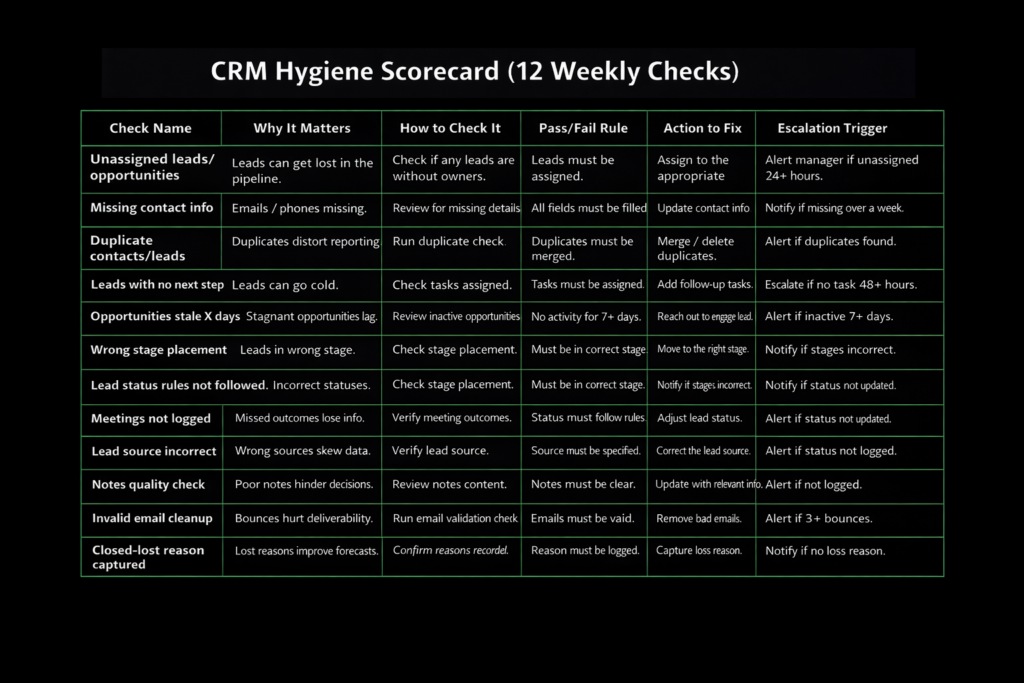
The CRM Hygiene Scorecard (12 Weekly Checks) — Table + Checklist
The CRM hygiene scorecard is your weekly tool for maintaining pipeline data quality. Below is a table of the 12 checks, including why each check matters, how to execute it, and what action to take if something fails.
How to Clean a CRM Fast — The Weekly Workflow (20–45 Minutes)
CRM cleaning doesn’t need to take hours. Here’s a time estimate for each part of the workflow:
- Unassigned leads and opportunities (5 minutes)
- Missing contact info (5 minutes)
- Duplicate contacts/leads (5 minutes)
- Leads with no next step (5 minutes)
- Opportunities stale X days (5 minutes)
- Stage placement and status rules (5 minutes)
- Notes and email validation (5-10 minutes)
In total, this workflow takes between 20 and 45 minutes, depending on the volume of leads in your system.
How to Stop Duplicates in a CRM (Rules + Guardrails)
Duplicate contacts and leads can cause confusion and lead to missed opportunities. To stop duplicates from entering your CRM:
- Set rules for lead entry: Ensure each lead’s contact information is verified before being added to the CRM.
- Use CRM features: Leverage built-in CRM duplicate detection tools.
- Implement a manual check: Run a regular duplicate check to keep the system clean.
FAQs
How do I clean a CRM fast?
To clean your CRM fast, follow the weekly scorecard system. Prioritize updating contact information, removing duplicates, and ensuring proper follow-up tracking.
What is CRM hygiene?
CRM hygiene is the process of regularly maintaining and cleaning up your CRM system, ensuring that the data remains accurate, up-to-date, and usable. Teams often assign this weekly routine to a growth assistant or offshore marketing assistants to keep follow-ups and attribution clean.
How often should CRM data be cleaned?
CRM data should be cleaned weekly to ensure pipeline health. Regular checks prevent issues from compounding and help keep the system efficient.
How do you stop duplicates in a CRM?
Prevent duplicates by setting clear rules for adding leads, using CRM duplicate detection tools, and running regular manual checks.
Take Control of Your CRM Hygiene
CRM hygiene is often an overlooked practice that plays a crucial role in determining whether your pipeline runs smoothly or becomes chaotic. By implementing this 12-point weekly scorecard, you’ll ensure that your CRM stays accurate, your follow-ups are consistent, and your reporting is reliable. With a disciplined approach to CRM hygiene, you prevent data from slipping through the cracks and maximize your sales efforts.
Ready to streamline your CRM and ensure your pipeline stays on track? Reach out to us today to learn how our Growth Assistants can support your CRM management and improve your business outcomes.